An hour of small, repeatable signals does more for how you sleep than any single change to the bedroom itself.
Sleep is not a switch. It is a descent the body needs some warning to begin, and most of what keeps people awake at midnight was decided somewhere around ten. A ritual works because it is the same every night, not because any one step in it is powerful.
Dim Before You Are Tired
Light is the strongest instruction the body receives about time. Lowering the light level an hour before bed — lamps instead of ceiling lights, screens dimmed and pushed further away — starts the process while you still feel awake. Waiting until you feel sleepy means the signal arrives late.
Warmth works in the same direction but in reverse: the body needs to shed heat to fall asleep. A cooler room and breathable bedding do more than a thicker duvet, and a warm shower helps precisely because of the drop that follows it.
The point of a ritual is that it never has to be decided. The same four things, in the same order, every night.
Vooka Sleep Journal
Give the Day Somewhere to Go
Most late-night wakefulness is unfinished thinking. Writing tomorrow’s first three tasks on paper closes the loop cheaply, and it stops the same list from being rehearsed in the dark. Reading something on paper for ten minutes serves the same purpose.
Keep the Bed for Sleeping
Working, scrolling and eating in bed teach the body that the mattress is a place where alertness is expected. Reserving it for sleep restores the association, and the effect compounds over a few weeks.
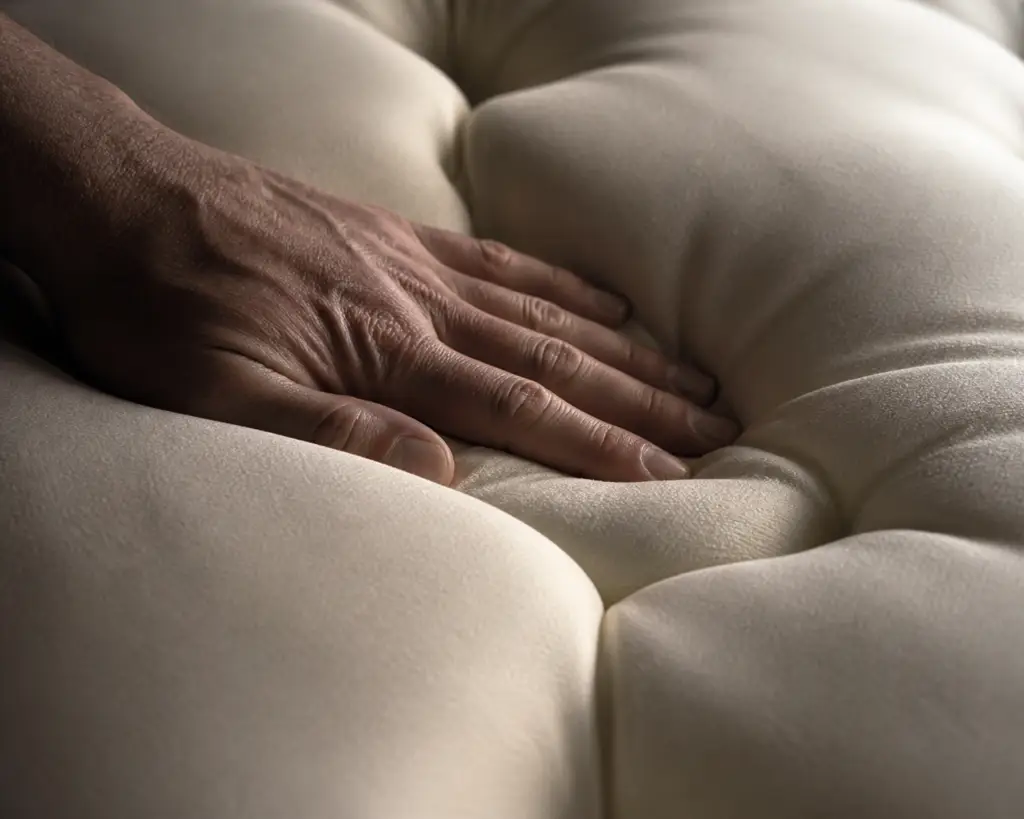
None of this compensates for a surface that makes you brace all night. If you wake sore or shift constantly, the ritual is not the variable to change first — the mattress is.